
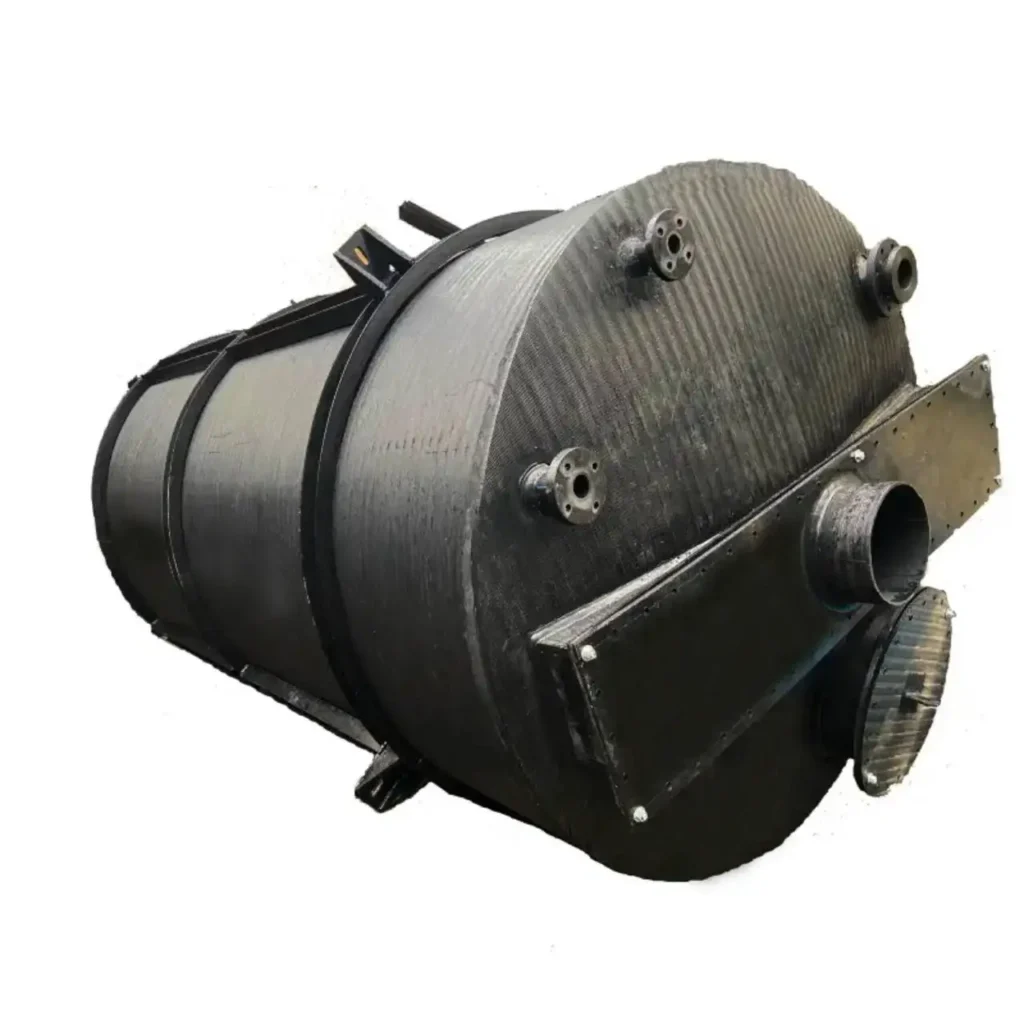
The Unique Extreme Hazard of Hydrofluoric Acid (HF)
Hydrofluoric acid (HF) is one of the most hazardous inorganic chemicals handled in glass etching, solar photovoltaic manufacturing, semiconductor fabrication, and fluorochemical synthesis. Unlike other mineral acids, HF actively attacks and dissolves silicon dioxide (SiO2). Consequently, glass-lined steel reactors and standard fiberglass laminates with standard silica glass veils are rapidly dissolved by fluoride ion attack.
1. The Chemistry of Fluoride Attack on Standard Composites
When hydrofluoric acid contacts standard glass fibers, the chemical reaction generates gaseous silicon tetrafluoride:
SiO2 + 4HF → SiF4 ↑ + 2H2O
This reaction dissolves the structural reinforcement of standard FRP from the inside out within days, leading to catastrophic equipment collapse.
2. Engineered Solution: PVDF-FRP Dual Laminate with Synthetic Veils
Nikunj Fibre Glass fabricates ultra-safe hydrofluoric acid storage tanks and piping systems utilizing specialized Dual Laminate engineering:
- Polyvinylidene Fluoride (PVDF) Chemical Liner: 3mm to 4mm virgin PVDF (Kynar 740) sheet provides complete chemical immunity to concentrated HF across all concentrations and temperatures up to 100°C.
- Carbon / Synthetic Polyester Veils: If solid FRP is specified, specialized carbon fiber veils and synthetic polyester (Nexus) veils are substituted for standard C-glass veils, completely eliminating silicon dioxide content from the corrosion barrier.
- External High-Strength FRP Structural Skin: Provides filament-wound structural hoop strength to handle full liquid hydrostatic head and external mechanical loads.
Safety First in Fluorochemical Engineering
Consult with Nikunj Fibre Glass specialists for engineered Dual Laminate Storage Vessels designed for hazardous fluorochemical processes.