
Introduction: Air Pollution Compliance in Chemical Manufacturing
Chemical processing, pharmaceutical API manufacturing, metal pickling, and dye synthesis generate corrosive emissions, including Hydrochloric Acid (HCl) vapor, Sulfur Dioxide (SO2), Chlorine (Cl2), Ammonia (NH3), and Nitrogen Oxides (NOx). Discharging untreated exhaust gases violates CPCB and GPCB pollution control standards.
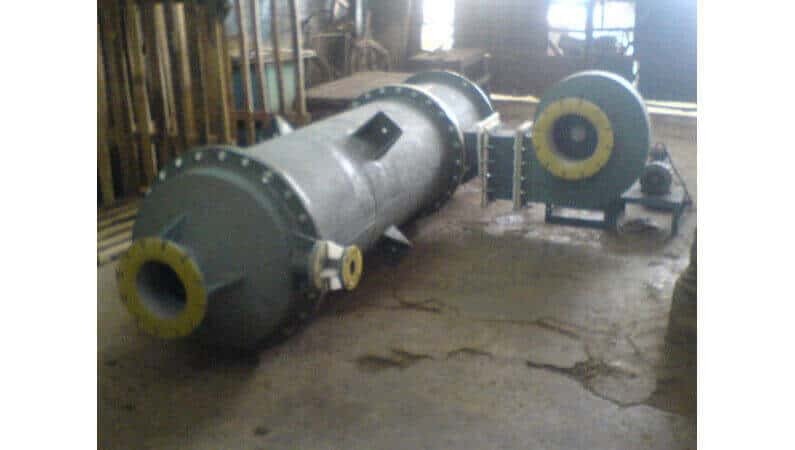
The Industrial Packed Bed Wet Scrubber fabricated from chemical-resistant FRP or PP-FRP is the most reliable, high-efficiency technology for neutralizing gaseous contaminants.
Working Principle of a Counter-Current Packed Bed Scrubber
A packed bed scrubber operates on continuous mass transfer between gas and liquid phases:
- Gas Entry & Distribution: Contaminated process exhaust is drawn into the bottom inlet of the vertical tower via an FRP Centrifugal Blower.
- Counter-Current Absorption: Gas flows upward through a randomized packing section (Polypropylene Pall Rings or Tellerettes) while alkaline scrubbing liquid (NaOH solution) is sprayed downward through non-clog nozzles.
- Neutralization: Random packing provides 110-180 m²/m³ of contact area, facilitating instantaneous gas neutralization:
HCl + NaOH → NaCl + H2O. - Mist Elimination: Cleaned gas passes through a top chevron demister to eliminate entrained moisture before stack discharge.
Efficiency Across Common Chemical Gases
| Pollutant Gas | Scrubbing Liquid Medium | Achievable Removal Efficiency |
|---|---|---|
| Hydrochloric Acid (HCl) | Water or 5% NaOH | 99.5% – 99.9% |
| Sulfur Dioxide (SO2) | Sodium Hydroxide (NaOH) | 95.0% – 98.0% |
| Ammonia (NH3) | Dilute Sulfuric Acid (H2SO4) | 98.5% – 99.5% |
Turnkey Air Pollution Solutions
Contact Nikunj Fibre Glass in Vapi for turnkey design, fabrication, and commissioning of pollution control scrubbers.