
Introduction: Matching Scrubber Technology to the Emission Stream
Industrial wet scrubbers come in diverse designs, but the two most prominent are Packed Bed Scrubbers and Venturi Scrubbers. Selecting the correct type depends on whether the primary emission is gaseous vapor or sub-micron particulate matter.
1. Venturi Scrubbers: High-Energy Particulate Removal
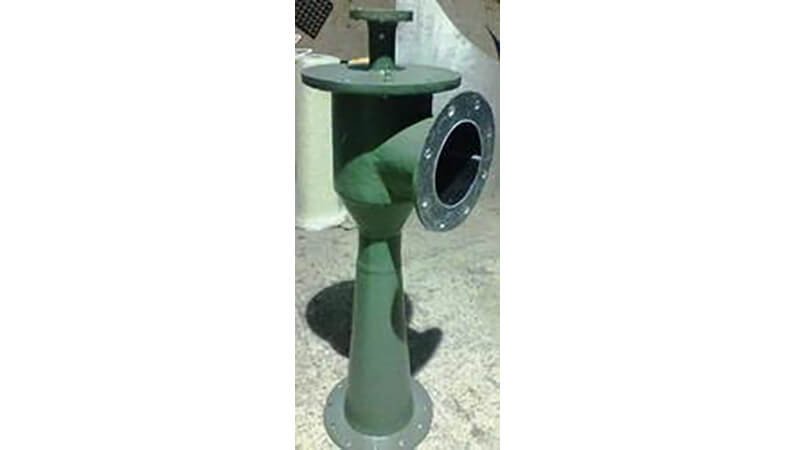
A Venturi scrubber accelerates incoming gas through a converging throat section up to 60-120 m/s. Scrubbing water injected into the throat is atomized into microscopic droplets by high shear velocity, trapping fine solid dust, metallic fumes, and sticky particulates down to 0.5 microns. They operate with a higher pressure drop (200 – 1000 mm WG) but excel where particulate matter would foul packed towers.
2. Packed Bed Scrubbers: High-Efficiency Gas Absorption
Packed towers feature low pressure drops (50 – 150 mm WG) and provide maximum residence time for gaseous mass transfer. They are ideal for water-soluble gases (HCl, Cl2, NH3, SO2, HF) without heavy dust loads.
Comparative Engineering Matrix
| Parameter | Venturi Scrubber | Packed Bed Tower |
|---|---|---|
| Primary Target | Sub-micron particulates, heavy dust, aerosol fumes | Gaseous vapors and acid/alkali fumes |
| Pressure Drop | High (200 to 1,000 mm WG) | Low (50 to 150 mm WG) |
| Blower Energy Consumption | High HP motor required | Moderate energy consumption |
| Clogging Susceptibility | Zero internal packing to foul | Susceptible if heavy particulates enter packing |
Hybrid Venturi-Packed Tower Systems
In applications like incineration or pigment roasting where exhaust contains both toxic fumes and fine ash, Nikunj Fibre Glass engineers dual-stage systems: a Venturi pre-scrubber followed by a packed bed absorption column.