
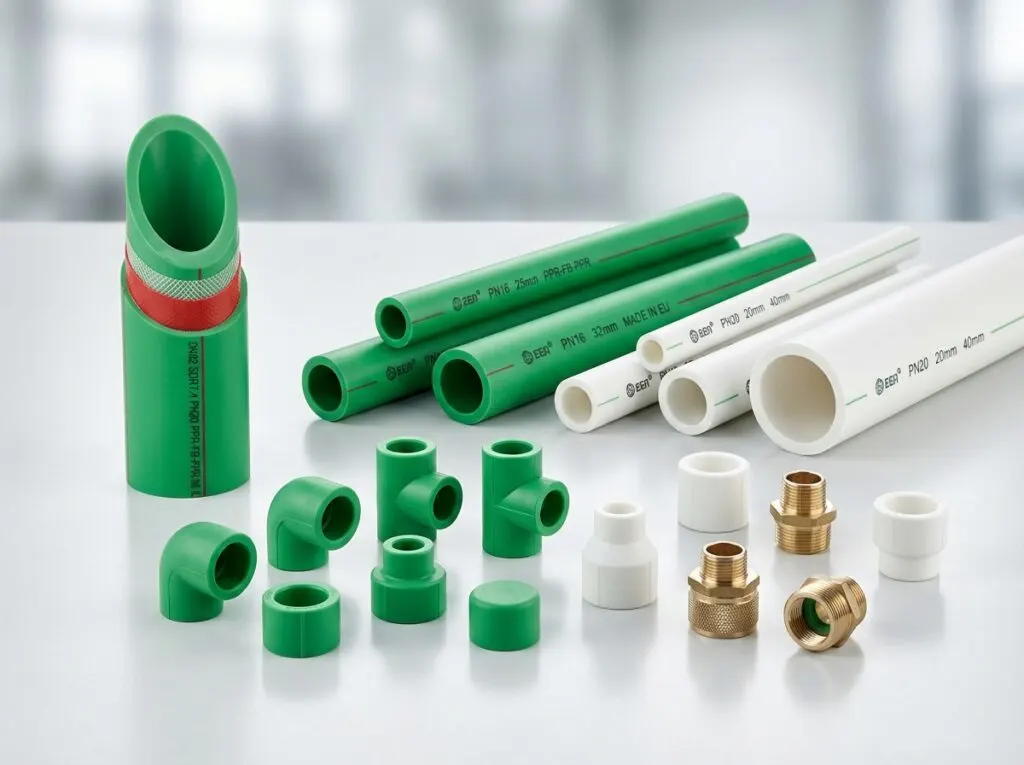
Introduction: Thermoplastic Piping in Industrial Facilities
Selecting the right thermoplastic piping material is critical for conveying corrosive chemicals, compressed air, and hot process fluids. The three most common choices are PPH (Polypropylene Homopolymer), PPR (Polypropylene Random Copolymer), and HDPE (High-Density Polyethylene).
Comparative Material Properties
| Property | PPH (Homopolymer) | PPR (Random Copolymer) | HDPE (PE100) |
|---|---|---|---|
| Continuous Temperature | Up to 95°C | Up to 70°C – 90°C (hot water) | Up to 60°C |
| Chemical Resistance | Highest resistance to industrial acids & alkalis | Moderate chemical resistance | Excellent for acids & underground runs |
| Flexibility & Ductility | Rigid, high modulus | Ductile, good impact absorption | Highly flexible, resists ground shifting |
| Primary Application | Chemical processing, pickling, acid piping | Compressed air, hot water plumbing | ETP drainage, buried pipelines, effluent |
Explore Chemical Process Piping
Browse our range of PPH Pipe Fittings and industrial piping components manufactured by Nikunj Fibre Glass.