
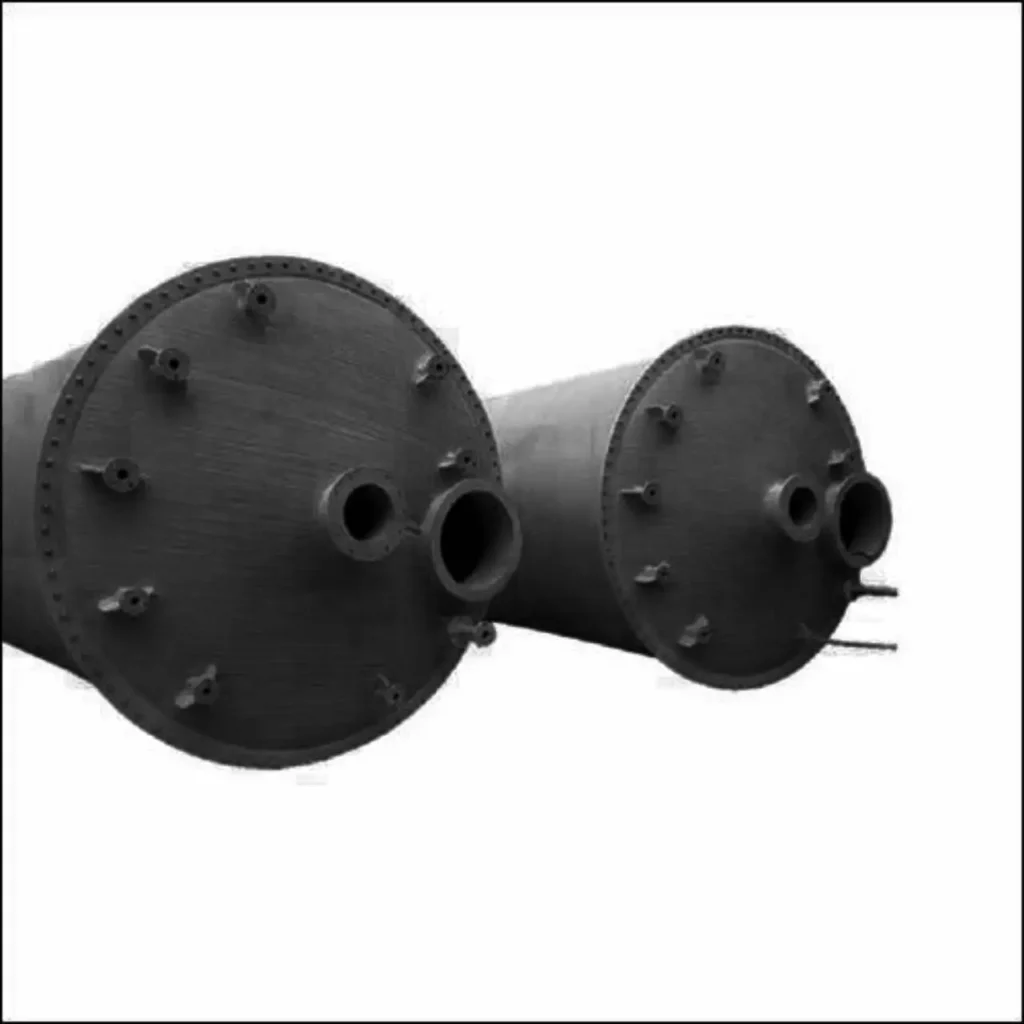
The Hazard of Electrostatic Charge in Non-Metallic Vessels
Fiberglass Reinforced Plastic (FRP) is inherently an electrical insulator with surface resistivity typically exceeding 10^12 ohms/square. When storing non-conductive flammable solvents such as toluene, xylene, hexane, methanol, or acetone, the fluid movement during pumping, splashing, or agitation generates significant static electrostatic charges. If the charge builds up without a path to dissipate, an electrostatic spark can ignite flammable vapors, causing an explosion.
1. Engineering Anti-Static FRP Laminates
To safely handle flammable and combustible fluids in FRP tanks, Nikunj Fibre Glass incorporates conductive composite technology conforming to NFPA 77 (Recommended Practice on Static Electricity) and BS 4994:
- Conductive Resin Barrier: The internal corrosion barrier resin is formulated with conductive carbon black, carbon nanotubes, or graphite powder. This reduces surface resistivity down to below 10^6 ohms/square (conductive / dissipative range).
- Continuous Grounding Grid: Copper grounding mesh or conductive carbon tape ribbons are laminated directly into the structural backing layers, connecting all internal surfaces to external earth bosses.
- Internal Dip Pipes (Submerged Filling): Fill pipes are designed to extend near the bottom of the vessel, preventing splash filling and minimizing electrostatic charge generation during loading.
2. Testing and Certification Protocols
Prior to dispatch, anti-static tanks undergo rigorous surface resistance testing using megohmmeters and four-point probe meters to confirm electrical continuity across all internal nozzles, baffles, and external earth grounding lugs (maximum resistance to ground < 10^6 ohms).
Nikunj Fibre Glass Safety Engineering
Consult with our engineering team for ATEX-compliant, anti-static FRP Solvent Storage Tanks.