
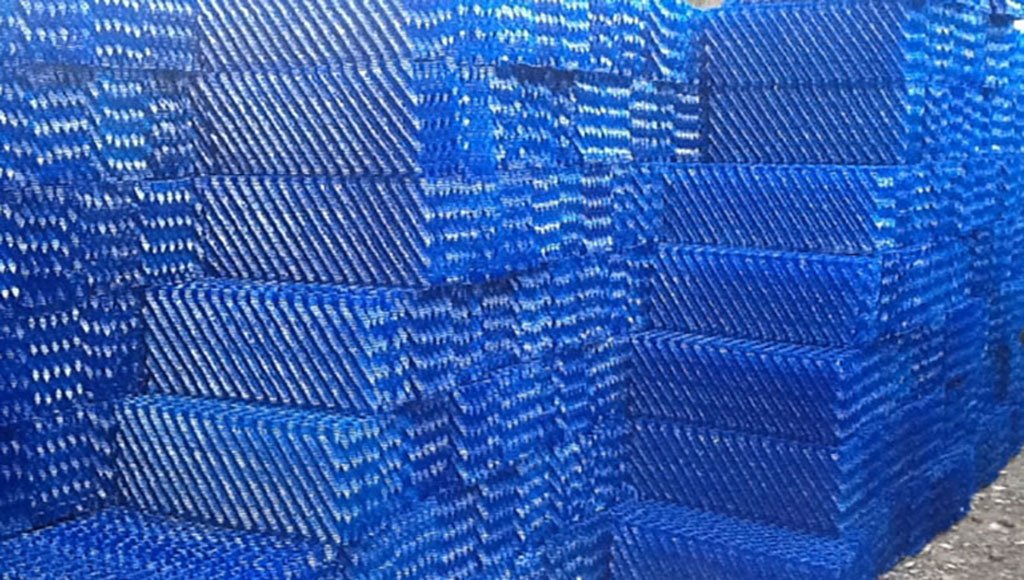
Cooling towers are the unsung thermal workhorses of manufacturing plants, power generation stations, petrochemical complexes, and commercial chiller plants. At the heart of every evaporative cooling tower is the fill media—the dense packing responsible for breaking hot return water into paper-thin films to facilitate evaporative heat rejection. Yet, cooling tower fills are frequently the most neglected component in a plant’s preventative maintenance schedule.
As cooling water evaporates, dissolved calcium, magnesium, silicates, biological algae, and airborne particulate soot accumulate across the fill flutes. When fills foul, scale, or sag, heat transfer efficiency plunges. A mere 2°C increase in cooling tower cold water basin temperature can inflate industrial chiller compressor power consumption by 6% to 8%. In this engineering guide, Nikunj Fibre Glass outlines how to inspect, clean, and execute a flawless cooling tower fill replacement.
5 Warning Signs Your Cooling Tower Fills Need Immediate Replacement
- Cold Water Temperature Creep (Approach Drift): The cooling tower “approach” is the temperature difference between cold water leaving the tower basin and the ambient wet-bulb temperature. If approach temperature steadily increases under identical wet-bulb conditions, fill heat-exchange surface area has degraded.
- Visible Mineral Scaling and Flute Choking: Hard calcium carbonate and silica deposits coat flutes, turning lightweight plastic packs into heavy mineral blocks. In severe cases, scale adds thousands of kilograms of dead weight, risking structural collapse of internal support grids.
- Sagging, Brittle, or Crumbling Plastic: Continuous exposure to UV light, oxidizing biocides (chlorine/bromine), and thermal cycling eventually embrittles low-grade PVC. If sheets crack upon gentle fingertip pressure or sag unevenly, the fill has lost structural integrity.
- Channeling & Uneven Water Distribution: When water bypasses scaled or collapsed sections and gushes through isolated voids, large volumes of circulating water escape without ever contacting cooling airflow.
- High Fan Motor Amperage or Tripping: Clogged flutes severely restrict airflow, driving up static air pressure drop across the tower. The cooling tower fan motor is forced to draw excessive current, leading to thermal overload trips.
Comparison: Chemical Descaling vs. Block Replacement
| Assessment Factor | On-Line / Off-Line Chemical Cleaning | Full Pack Replacement |
|---|---|---|
| Suitable When | Light, loose biological fouling; young flexible plastic | Heavy calcium scale; brittle, cracked, or sagging sheets |
| Restoration of Heat Transfer | Partial (typically 60%–75% efficiency restored) | 100% Brand-new thermal design efficiency |
| Risk to Downstream Equipment | High (Dislodged scale chunks clog heat exchangers) | Zero (New clean polymer packs) |
| Downtime Required | 12 to 24 Hours chemical circulation | 1 to 2 Shifts modular block swap |
| Long-Term Economics | Short-term band-aid; recurring chemical expense | High ROI; pays back within 3–6 months in power savings |
Need Fast Delivery of Replacement Fills in Gujarat?
Nikunj Fibre Glass manufactures ready-stock standard 600×300×150 mm PVC and ABS cooling tower fill packs with edge-folded technology, supplying factories across Vapi, Ahmedabad, Surat, Ankleshwar, and nationwide.
Step-by-Step Cooling Tower Fill Replacement Procedure
- Isolation & Safety Lockout (LOTO): De-energize and lock out circulating pumps and fan motor drives. Shut and tag intake valves. Ensure confined space ventilation protocols are followed before technicians enter the tower envelope.
- Basin Drainage and Sludge Evacuation: Drain cold water basin water and vacuum out accumulated silt, mineral scale fragments, and bio-sludge to prevent recontamination of new packs.
- Removal of Deteriorated Fills: Carefully dismantle old fill blocks layer by layer. Handle brittle PVC with care to prevent debris from falling into the cold water sump. Safely bag and dispose of spent polymer packs.
- Internal Structural & Support Inspection: Inspect fiberglass (FRP) or stainless steel support beams, tier grids, drift eliminators, and casing walls. Repair or replace any sagging or corroded support beams before installing new weight.
- Precision Installation of New Packs: Install new Nikunj Edge-Folded PVC or ABS Sigma fill blocks in staggered rows perpendicular to support beams. Ensure a tight, snug fit against tower casing walls—leaving even a 25 mm gap along perimeter walls causes air to bypass the fill entirely, ruining thermal performance.
- Nozzle Alignment & Pre-Commissioning Flush: Inspect spray nozzles to ensure clean, uniform cone distribution. Circulate raw water for 30 minutes to wash away any loose packing dust, verify basin water level controls, and restart fan drives.