
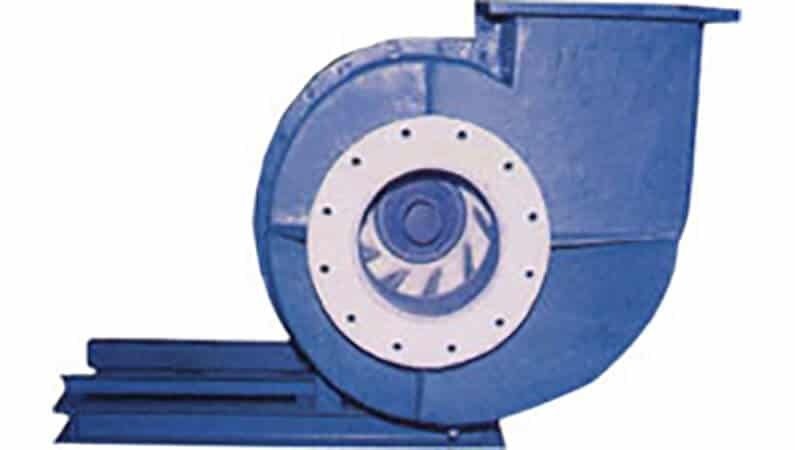
Introduction: The Heart of Corrosive Ventilation Systems
In chemical plants, electroplating shops, and pickling halls, standard carbon steel or stainless steel exhaust fans fail rapidly due to acid vapor corrosion. An FRP Centrifugal Blower fabricated with solid vinyl ester delivers unmatched durability, moving aggressive vapors safely for decades without corrosion or impeller imbalance.
1. Backward Curved vs. Radial Impeller Blades
- Backward Curved Impellers: Offer high mechanical efficiency (up to 75% – 82%) and non-overloading power characteristics. Best for clean chemical exhaust through packed bed scrubbers and long ductwork runs.
- Radial Blades: Self-cleaning blade geometry ideal for dusty streams, moisture-laden exhaust, or pickling tanks where particulate accumulation could throw backward curved blades out of dynamic balance.
2. Sizing Calculations: Airflow (CFM) and Static Pressure (SP)
Correct blower selection requires calculating total system resistance:
- Capture Velocity & Airflow: Determine total CFM required based on capture hood geometry and ACGIH ventilation guidelines.
- Duct Friction Losses: Calculate friction and dynamic losses across all FRP duct straight runs, elbows, dampers, and transitions.
- Scrubber Pressure Drop: Add packing bed, spray nozzle, and demister pad resistance (typically 75 – 120 mm WG for packed towers).
- Stack Exit Losses: Add final discharge velocity head.
FRP Blower Engineering Features at Nikunj Fibre Glass
Every FRP Blower manufactured by Nikunj features dynamic balancing to ISO 1940 Grade G2.5, heavy-duty TEFC chemical-duty motors, Teflon lip seals, and dual-layer vinyl ester casing construction.