
Description
Energy-Efficient PPR Compressed Air Piping Systems
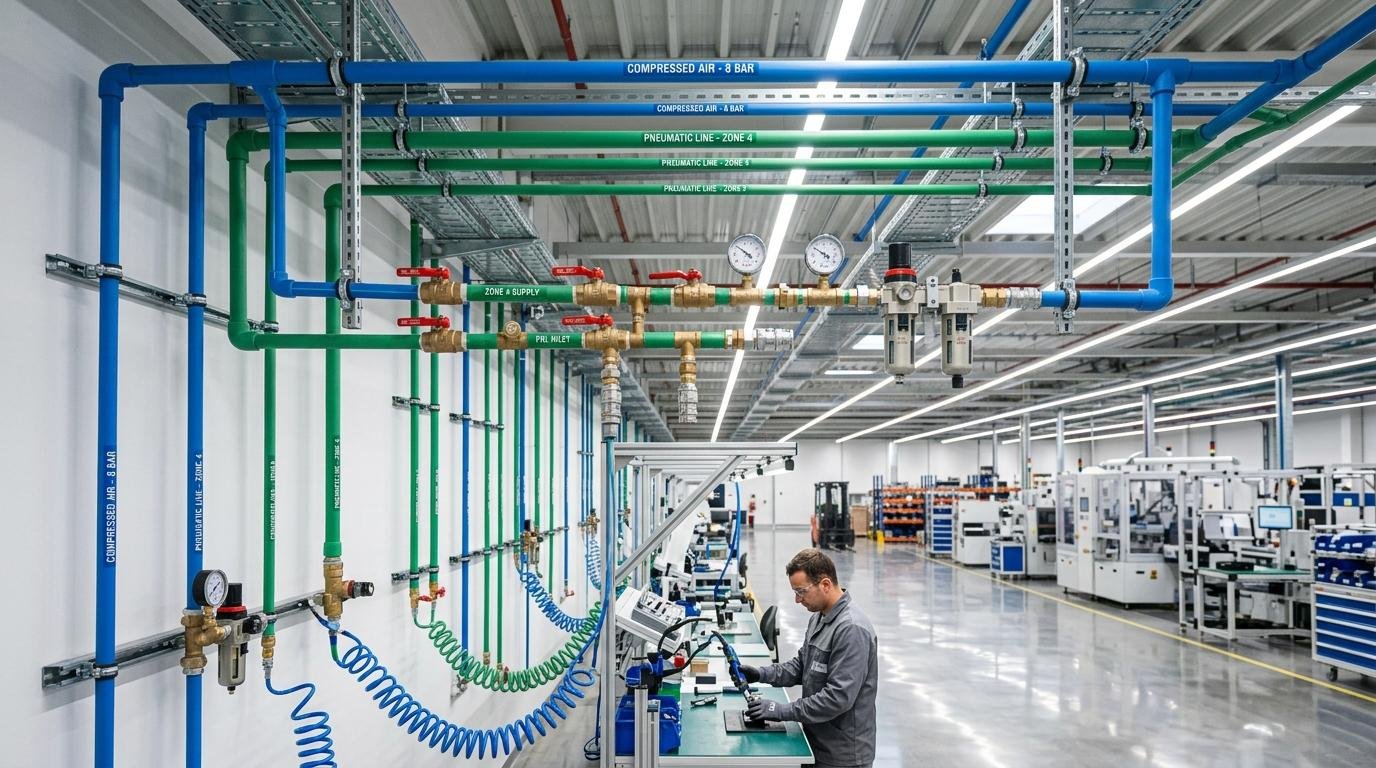
Nikunj Fibre Glass designs and manufactures high-performance PPR Compressed Air Piping Systems in Vapi, Gujarat. Since 1992, our facility has equipped state-of-the-art factories with clean, leak-free pneumatic distribution networks. Therefore, automotive plants, textile mills, pharmaceuticals, and manufacturing workshops rely on our advanced piping solutions.
Traditional Galvanized Iron (GI) and Mild Steel (MS) air pipes suffer from internal rust, moisture corrosion, and threaded joint leaks. In contrast, Polypropylene Random Copolymer (PPR) provides an ultra-smooth, mirror-like internal surface that completely eliminates rust particles and reduces friction losses. Specifically, our PPR compressed air pipes maintain line pressure up to 25 bar without air leakage.
The Modern Solution for Industrial Pneumatics
Compressed air accounts for up to 30% of an industrial plant’s total electrical power consumption. Because air leaks and internal pipe roughness waste compressor energy, switching to our PPR pneumatic piping system delivers direct electrical savings. For example, our smooth bore design reduces system pressure drop by up to 20% compared to aged metal pipes.
Key Advantages of PPR for Compressed Air
Energy Savings, Zero Leaks & Clean Air
- Zero Internal Corrosion: Metal pipes corrode from air moisture, sending rust flakes into delicate pneumatic cylinders and solenoid valves. PPR is 100% immune to corrosion, delivering pristine, contamination-free air.
- 100% Leak-Free Socket Fusion: Threaded joints on GI pipes leak constantly under machine vibration. In contrast, PPR socket fusion creates a permanent, homogenous weld that can never vibrate loose or leak air.
- Significantly Reduced Pressure Drops: The roughness coefficient of PPR is just 0.007 mm compared to 0.15 mm for steel. Consequently, air moves faster with less friction, reducing compressor workload.
- Lightweight & Easy Installation: PPR weighs 75% less than GI pipes, making overhead suspension and ceiling bracket mounting fast and safe without heavy structural support.
- Condensation & Moisture Resistant: The low thermal conductivity of PPR minimizes surface condensation, keeping factory work areas clean and dry.
Technical Specifications: PPR Compressed Air Piping
Engineering Ratings & Design Parameters
| Technical Parameter | Design Standard & Engineering Specification |
|---|---|
| Design Standards | DIN 8077/8078, ISO 15874, and ISO 8573-1 air quality standards |
| Raw Material | 100% Virgin Polypropylene Random Copolymer (PPR-C Type 3) high-impact resin |
| Size Range | 20 mm (1/2″) to 160 mm (6″) outer diameter |
| Pressure Ratings | PN16 (16 bar), PN20 (20 bar), and PN25 (25 bar) working pressures |
| Jointing Method | Socket Heat Fusion & Heavy-Duty Nickel-Plated Brass Threaded Fittings |
| Operating Temperature | -10°C to +70°C (continuous pneumatic duty) |
| Color Coding | Industrial Blue (standard for compressed air) or Green / White with blue stripes |
Industrial Applications of PPR Air Piping
Engineered for Clean Pneumatic Power
- ✅ Automated Manufacturing & CNC Shops: Clean, dry compressed air supply for CNC machining centers, robotic arms, and pick-and-place systems.
- ✅ Textile & Spinning Mills: High-volume pneumatic headers for automated looms, ring frames, and yarn spinning machinery.
- ✅ Pharmaceutical & Cleanroom Packaging: Contamination-free air delivery for blistering, blister packaging, and clean filling lines.
- ✅ Food, Beverage & Bottling Plants: Hygienic pneumatic power for PET blowing, sorting machines, and packaging conveyors.
Leading PPR Compressed Air Piping Supplier in Gujarat
Turnkey Supplies Across Industrial Hubs
Nikunj Fibre Glass manufactures and supplies complete PPR pneumatic piping systems from Vapi GIDC, Gujarat. In addition, we deliver rapid consignments across all major industrial manufacturing zones:
- Ahmedabad & Sanand: Vatva GIDC, Naroda, Odhav, Kathwada, Changodar, and Sanand
- Vapi & South Gujarat: Vapi GIDC, Sarigam, Umbergaon, Valsad, and Gundlav
- Surat, Ankleshwar & Dahej: Sachin GIDC, Pandesara, Ankleshwar GIDC, and Dahej PCPIR
- Vadodara & Central Gujarat: Makarpura GIDC, Nandesari, Halol, Savli, and Karjan
- Saurashtra Hubs: Rajkot, Jamnagar, Bhavnagar, and Morbi
Additionally, we manufacture matching uPVC Industrial Pipes, PP Ball Valves, and heavy-duty FRP Blowers. Therefore, contact Nikunj Fibre Glass today for pneumatic piping layouts and direct factory pricing.
Frequently Asked Questions (FAQ)
Common Technical Inquiries
Q1: Why is PPR superior to GI (Galvanized Iron) pipes for compressed air lines?
GI pipes inevitably rust internally from compressor moisture. The rust particles foul pneumatic tools, clog solenoid valves, and destroy cylinder seals. In addition, threaded joints on GI pipes vibrate loose, causing massive air leakage that forces air compressors to run constantly. PPR will never rust and its fusion-welded joints never leak.
Q2: What pressure rating should I select for an industrial compressed air line?
Most factory compressed air systems operate between 6 bar and 10 bar (90 to 145 PSI). We recommend our PN20 or PN25 rated PPR pipes. The PN20 rating provides a 2x to 3x safety factor against pressure surges, ensuring decades of reliable, maintenance-free operation.
Q3: How are drop lines and quick-connect couplers installed on a PPR air ring?
Technicians install equal or reducing tees on the main PPR header and run vertical drop lines down to workstation level. At the drop termination, a PPR-to-female brass threaded elbow or adaptor is installed, allowing direct screw-in connection of moisture separators, pressure regulators, and quick-release pneumatic couplings.
Mehul R. Chhaya (verified owner) –
Replaced old GI compressed air header with Nikunj PPR air piping at 8 bar. Elimination of internal rust scale has dramatically reduced solenoid valve failures in our CNC shop.