
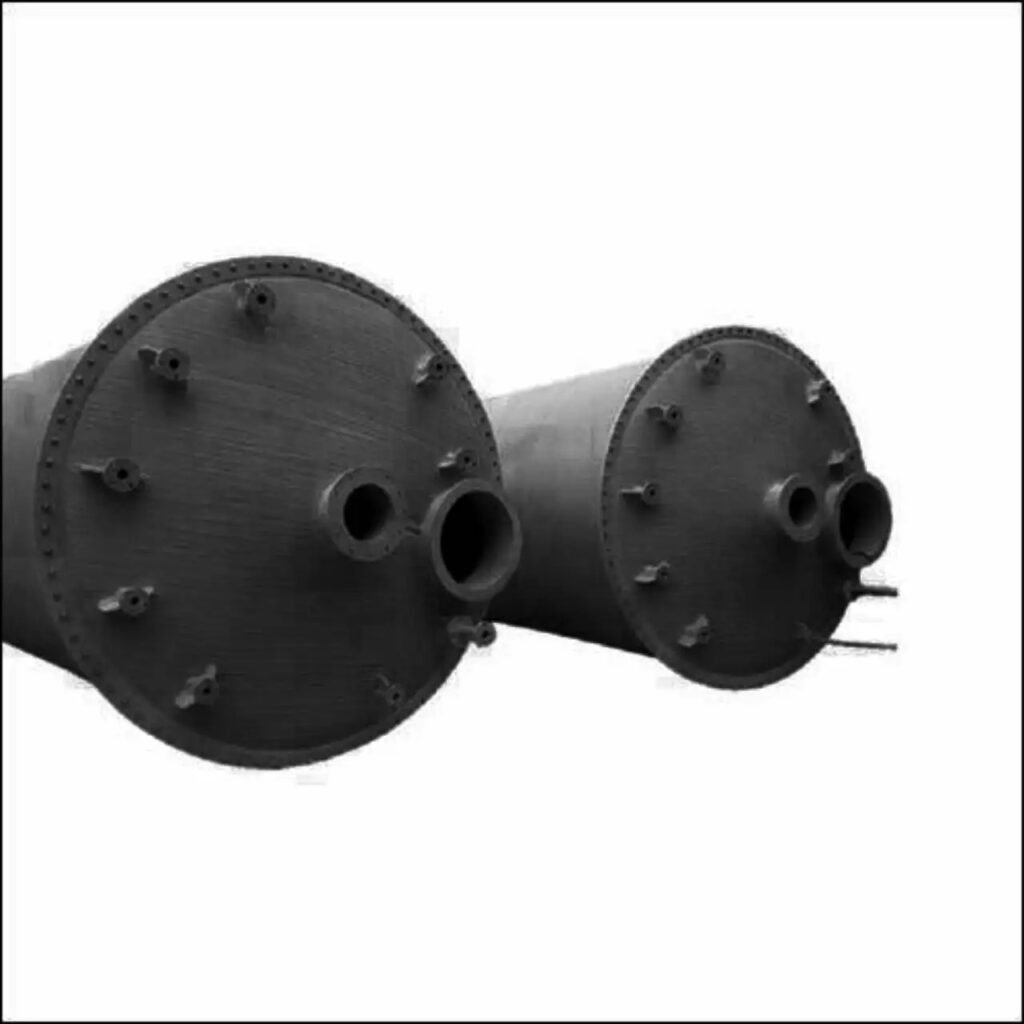
Introduction: Pushing Beyond Polypropylene Boundaries
While Polypropylene (PP) handles the majority of industrial acids, certain chemical process conditions—specifically high operating temperatures (>90°C), wet chlorine gas, bromine, concentrated nitric acid, and aggressive organic solvents—rapidly degrade standard polyolefins. For these extreme duty profiles, Polyvinylidene Fluoride (PVDF) dual laminate composites are required.
1. Polymer Structure & Chemical Inertness
PVDF is a fluoropolymer with alternating CH2 and CF2 groups. The high electronegativity of fluorine atoms creates an exceptionally strong carbon-fluorine bond, conferring outstanding resistance to oxidizers, halogens (chlorine, bromine, iodine), and severe acid hydrolysis.
2. Temperature & Pressure Limits
- Polypropylene (PP/PPH): Maximum continuous operating temperature of 75°C – 80°C in chemical environments. Tensile yield strength drops rapidly above 60°C.
- PVDF: Continuous thermal stability up to 120°C – 130°C in corrosive environments, with superior retention of mechanical modulus and abrasion resistance.
Selection Matrix: When to Specify PVDF
| Application Medium | Recommended Material | Engineering Rationale |
|---|---|---|
| 33% Hydrochloric Acid (Ambient) | PP-FRP | PP provides total inertness at lower cost. |
| Wet Chlorine Gas (70°C – 90°C) | PVDF-FRP | Chlorine oxidizes PP chains; PVDF is completely unaffected. |
| Nitric Acid (HNO3 > 40%) | PVDF-FRP | Strong oxidizing acid causes embrittlement in polyolefins. |
| Stainless Steel Pickling (HNO3 + HF) | PVDF-FRP | Hydrofluoric acid attacks glass and PP; PVDF provides fail-safe containment. |
Explore Dual Laminate Solutions
Learn more about Nikunj PVDF Tanks and Dual Laminate Equipment for critical chemical applications.